Offensive Security
Penetration Testin and Adversary Simulation
Cyberlinx's Offensive Security practice delivers authorised, intelligence-led attack simulations against your organisation's infrastructure, applications, people, and processes.
We think like the adversary so you can stay one step ahead. Our engagements go beyond checkbox compliance, they give you a real-world view of exploitable risk, with actionable findings your teams can act on immediately.
Our Services
We help organisations understand their exposure through comprehensive offensive security assessments, enabling informed risk management and stronger security outcomes.

Web Application/API Penetration Testing
Test the security of your web applications and APIs to identify vulnerabilities in code and configuration.

External Penetration Testing
Test your internet-facing servers and services against external threats to prevent unauthorized access.

Internal Penetration Testing
Assess the security of your internal network to detect and fix vulnerabilities that could be exploited by insiders or breached accounts.

Mobile Penetration Testing
Test your mobile applications to uncover security flaws and ensure data protection for users.

Wireless Penetration Testing
Test your wireless networks to identify security weaknesses and prevent unauthorized access.

Cloud Penetration Testing
Test the security of your cloud environment to detect misconfigurations and vulnerabilities that could be exploited by attackers
Advanced Simulation
Simulated real-world attacks designed to test your organisation’s ability to detect, respond to, and withstand advanced threats. Our red team engagements emulate sophisticated adversaries using stealth techniques to uncover weaknesses across systems, people, and processes.

Social engineering tests assess how vulnerable your organization is to manipulation tactics that exploit human behavior. These tests evaluate your staff’s ability to recognize and respond to various forms of psychological manipulation used by attackers. Below are some common social engineering techniques:

Attackers send fraudulent emails designed to trick recipients into revealing sensitive information or downloading malicious software.
A more targeted form of phishing, where attackers customize the email to appear as though it’s from a trusted source, making it more convincing.
Attackers use phone calls to impersonate trusted entities (e.g., IT support, banks) and trick individuals into revealing confidential information.
Similar to phishing but conducted through text messages. Attackers send malicious links or requests for personal information via SMS.
Attackers attempt to gain unauthorized physical access to secure areas by exploiting trust or manipulating security staff through methods like tailgating or impersonation.
As artificial intelligence becomes embedded in business-critical applications, it introduces a new class of vulnerabilities that traditional penetration testing doesn't cover. Cyberlinx's AI Security Testing service assesses the security of AI and LLM-integrated applications from an attacker's perspective, identifying weaknesses before threat actors can exploit them.

Direct and indirect attacks that manipulate model behaviour through crafted inputs
Techniques to circumvent content filters, guardrails, and system prompt controls
Extracting training data, system prompts, or confidential information through inference
Exploiting LLM-connected tools, APIs, and external data sources to achieve unintended actions
Multi-step attacks against autonomous AI agents that can browse, execute code, or interact with enterprise systems
Resource exhaustion and context manipulation techniques that degrade model availability
Our Methodology
Our testing methodology follows a structured process aligned to industry standards. Every engagement is conducted by certified consultants who provide clear and actionable findings.
Testing Standards

OWASP Testing Guide

NIST SP 800-115

PTES (Penetration Testing Execution Standard)

OSSTMM (Open Source Security Testing Methodology Manual)

Australian Government Information Security Manual (ISM)

MITRE ATT&CK
Framework
What You Get
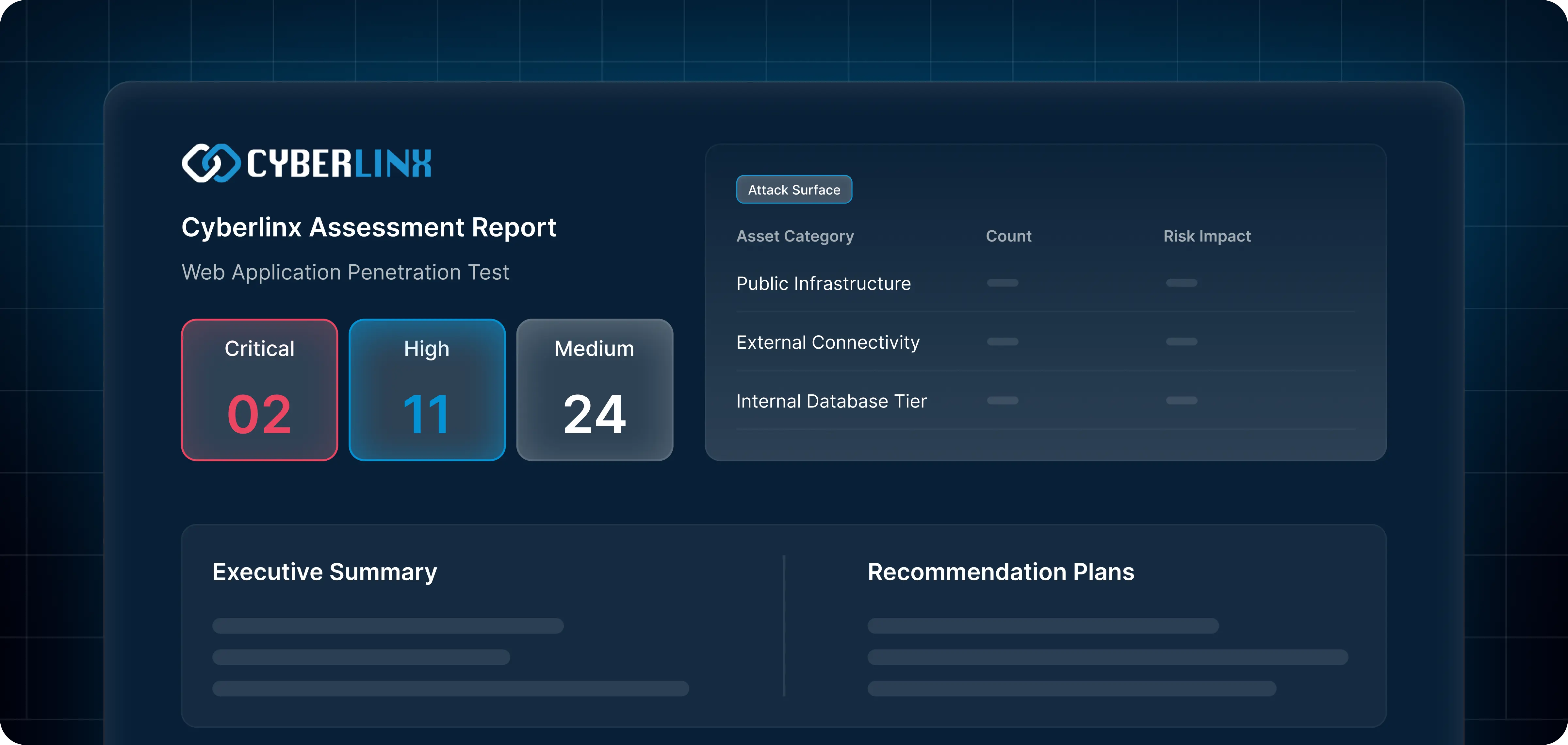
Every engagement concludes with a detailed executive summary and full technical report including risk ratings, proof-of-concept evidence, and prioritised remediation steps. You'll also receive a certificate of completion and a debrief session to walk through findings with your team.